顯示具有 看世界 標籤的文章。 顯示所有文章

2011年5月9日 星期一

[剪報] 2011新加坡大選觀察。


[獨立媒體] 新加坡國會大選觀選記

今次選舉,各黨派非常重視論述和政策辯論,而少打煽情和悲情牌。例如當總理李顯龍說新加坡像一輛車,需要一個有經驗的司機架駛,而行動黨就是那位司機。工人黨秘書長劉程強立即反駁,說新加坡需要一個副司機,即反對黨,在司機睡著時「一巴」打醒他。當行動黨說反對黨好像蘑菇,只在大選時才冒出來,大選後就不見影蹤,工人黨反駁說,行動黨經常亂劃新選區,反對黨如何能在以前不存在的選區活動?各黨亦就不同政策進行辯論,例如行動黨就經常質問反對黨,如果當選,會有什麼計劃管理選區的市鎮委員會。反對黨亦為高樓價問題提出建議,例如把新「組屋」的價格與市民收入的中位數掛勾,而不是根據市場定價。這種選戰,與台灣和香港都有很大分別。

[聯合晚報/社論] 新加坡站在改變的路口
外界或許還不能以「期待變天」來描述星國選民的主流意識,卻可以透過這次大選前後的民意波動,預告星國政治面臨了嶄新的形勢。執政長達半世紀的人民行動黨,面對數位世代的年輕選民,不能再依恃過去習慣的執政邏輯,「有所變」顯然要比「有所不變」更為重要了。
星國政論網站「淡馬錫評論」七日當天在「臉書」公布投票站出口民調,顯示年輕選民幾乎一面倒支持反對黨。新加坡全國人口五百萬,「臉書」用戶就有三百萬,其影響可想而知。
「集選區」於一九八八年開始實行。當時「行動黨」的說法是為了保障國會內有少數族裔的代表而設置,參選的政黨在每個選區分別提出四、五或六人的一組候選人,選勝了就全上,但其中必須至少有一位少數族裔候選人。

自一九八八年以來,「集選區」一直是「行動黨」固若金湯的基地。但更大的問題是,這個獨一無二的「集選區」制度,也造成了新加坡獨一無二選票無法反應代表權的現象。以這次選舉來說,「行動黨」實際上只獲得六○.一%選票,卻囊括國會八十七個議席裡的八十一個,比例達九三%,取得絕對優勢。
新加坡實施強制投票。該國國會84名議員是由民選直接產生的,來自於全國各個選區,其中包括14個集選區(Group Representation Constituency,GRC)和9個單一選區(Single Member Constituency)。


2011年5月6日 星期五

鄉民們!請大聲的告訴我們,你罵的是誰。

在這個罵媒體、罵記者儼然已成為一種『政治正確』的當下,任何人想替記者們說些好話,好像也只是徒勞。然而,對於從高中開始就嚮往新聞工作的我,對於如願以第一志願進入政大新聞系的我,雖然最後還是成了新聞界的逃兵,卻始終對新聞有著一種難以割捨。

我並不打算睜著眼睛說瞎話,說媒體多好多好,我自己也常常對我們的媒體、記者的報導有許多怨言。我也不打算把一切歸咎到體制,說體制磨滅了記者個人胸腔的熱血,儘管這就是血淋淋的現實。不過,我最最最無法接受的,是用一句「妓者,不意外。」等話語,就把全體新聞工作者鬥臭。(妓女/性工作者躺著也中槍)尤其是我其實知道,即使大環境如此惡劣,即使社會地位如此低落,還是有非常多非常多的我的同學、學長學姊,在裡頭認真、努力地做好自己的工作。這對他們非常地不公平啊啊啊!!!!

除此之外,「天下烏鴉一般黑」的這種指摘,也絲毫無助於媒體環境的改善。以經濟學的外部性理論來比喻(我知道這樣的類比似乎有點跳tone),各家媒體報導的爛新聞,就像是一座座排放污水的工廠,污染著我們的環境。但大家看到這個又臭又髒的河川,就大罵反正生意人就是沒良心,工廠就是爛透了。如此一來,這些污染被外部化,真正造成污染的A公司,就會扯說BCD工廠大家都是這樣做,不是我們的問題。而即使D工廠確確實實有將污水妥善處理,D公司的員工去市場買個菜也要被婆婆媽媽酸個兩句,說什麼環境就是被你們這樣的人糟蹋云云。這些人不就是衰小,被罵爽的?

新聞系的老師們念茲在茲,總要我們懂得「愛惜羽毛」,要把自己的名字當做是一個品牌經營。因為人家不會記得你曾經待過中時、聯合或是中天、三立,可是你的名字會跟著你一輩子!當你的名聲被自己搞臭,你不管去到哪裡,永遠會有人記得你就是當初報導那個的XXX。不誇張,我今天看到當年跑教育線的陳X薇的新聞(哄抬米價的那篇),我就會想起她之前做過的那些發臭的報導。

不要再讓媒體打迷糊帳了!也不要讓真正有為的記者跟著挨罵了。所以,鄉民們!當你看到一則爛新聞,看到一個爛記者的時候。除了冷冷的烙下一句「妓者」,可否有建設性一點。大聲的說出

E/報新聞A記者,你報導的B事件如何如何,真是爛透了。

(以上是舉例沒有任何影射,請勿對號入座)

如果可以的話,真想成立一個網站,專事記錄下每一個爛媒體報導的爛新聞,還有每一個爛記者作過的爛帳,讓你們自己瞧瞧。


****

這篇文章想說的事,其實已經在我心底醞釀了好久。今天在曾峻峰的FB上看到,系上學弟妹在朱學恆那邊發生的事,看著看著又興起了想寫下這些想法的念頭。


2010年10月27日 星期三

[讀書會]

Thursday, Oct. 21, 2010

City Centered

By Bruce Katz

With our recovery sluggish and our politics in rancorous free fall, the U.S. is on a desperate search to create jobs in the near term and retool the economy for the long haul. As Dorothy found in The Wizard of Oz, the answers surprisingly lie no farther away than home, or more precisely, the top 100 cities and their environs — the major metros — where most Americans live, work and play.

(原文連結)

City Centered Outline

n The U.S. is on a desperate search to create jobs in the near term and retool the economy for the long haul.

The solution lies in the top 100 cities and their environs — the major metros — where most Americans live, work and play.

n Metro Powered — features of Metro in United State

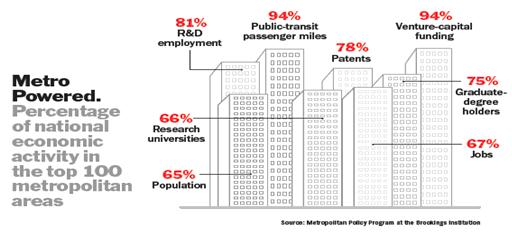
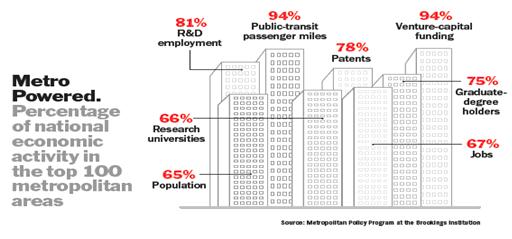
House almost two-thirds of our population

Generate 74% of our gross domestic product (GDP)

Disproportionately concentrate the assets that drive economic success:
(1) patents, (2) advanced research and (3) venture capital, (4) college graduates and Ph.D.s, and (5) air, rail and sea hubs.
n This dynamic holds not only for the U.S. but also around the globe.

The rise of Brazil, India and China is a direct product of their rapid urbanization and the growth of supersize metro economies like São Paulo, Mumbai and Shanghai.

n We mythologize the benefits of small-town America, but it's the major metros that make the country thrive.

Placing too much tax revenues on suburb. Prosperous small towns are most often suburbs of major cities.

Pursuing urban policies devoted to subsidized housing and tax incentives to revitalize inner-city neighborhoods rather than creating policies that, for example, support powerful and promising industry clusters.

"Cities are places where two plus two equals five."
Ideas collide and flourish. New inventions and processes emerge in research labs and on factory floors. New products and companies follow.

n Worldwide competitors understand that prosperity in this century will come via the distinct assets and attributes of their metro engines.

Germany, China and Brazil are investing in wholesale change through advanced research, renewable energy, modern ports, high-speed rail and urban transit in Munich, Shanghai and São Paulo — the metros that drive their economies.

n What American should do?

Revenue
Reducing the federal deficit, and the other half, to efforts grow export.

Infrastructure
Start investing to help American businesses innovate and have access to a world-class infrastructure.

Meet the Challenges
Cities and suburbs need to team up with businesses to devise export initiatives that build on their metro's distinctive position in the market.

Question:

1. What do you think about the global competition in the Metros?

2. Does it against the American Dream, if the government redirects their resource away from suburb resident?

2010年10月20日 星期三

[讀書會] Currency War

The global economy

How to stop a currency war

Keep calm, don’t expect quick fixes and above all don’t unleash a trade fight with China

Oct 14th 2010


IN RECENT weeks the world economy has been on a war footing, at least rhetorically. Ever since Brazil’s finance minister, Guido Mantega, declared on September 27th that an “international currency war” had broken out, the global economic debate has been recast in battlefield terms, not just by excitable headline-writers, but by officials themselves. Gone is the fuzzy rhetoric about co-operation to boost global growth. A more combative tone has taken hold (see article). Countries blame each other for distorting global demand, with weapons that range from quantitative easing (printing money to buy bonds) to currency intervention and capital controls.

(原文連結)

Currency War

Brazil’s finance minister declared the “International currency war” had broken out.

n Counties blame each other for distorting global demand, with weapons including quantitative easing (printing money to buy bonds), currency intervention, and capital control.

n Three battles

ü China’s unwillingness to allow Yuan to rise more quickly

ü Rich world’s monetary policy : quantitative easing

ü Developing countries’ response to the capital flows

n Still modest now, but it may turn into real trade war

ü Sluggish economy growth in the rich world is likely to last for years.

ü As fiscal austerity kicks in, the appeal of using a cheaper currency as a source of demand will increase.

n Developing countries’ counter measure to capital flood

n If the flood of foreign capital intensifies, developing countries may be forced to choose between:

ü Losing competitiveness hurt export

ü Draconian capital controls decrease FDI & economy recovery

ü Allowing their economies to overheat inflation

n The rich world’s mix of fiscal austerity and loose monetary policy—will have an uncomfortable impact on small, open emerging economies, in the form of unwelcome capital inflows. Taiwan


Question:

Do you agree or disagree that the government should intervene in the market in order to maintain their export competitive?

2010年10月5日 星期二

[讀書會]How Should America Handle Extreme Speech?

How Should America Handle Extreme Speech?

By NANCY GIBBS Sunday, Oct. 03, 2010

Illustration of the Statue of Liberty holding a burning book.

In the end, Pastor Terry Jones did not burn a Koran, and another eternally sad and suddenly bitter 9/11 anniversary came and went. But he'll be back — if not Jones, then the swarms of zealots and charlatans who were inspired by how a preacher with a congregation of about 50 could command the attention of the White House, the Pentagon, the Vatican, Sarah Palin, Angelina Jolie and just about every network, newspaper and blog in the land. It was called a media circus, but it was the kind in which the clowns attacked the children and everyone walking the tightrope looked down and couldn't see any net.

(原文連結)

Freedom of speech & Extreme Speech

n Background

ü The Jones did not burn a Koran on 9/11 anniversary, but he'll be back.

ü Those inspired by how a preacher could command the attention of the White House, the Pentagon, the Vatican, Sarah Palin, Angelina Jolie and just about every network, newspaper and blog in the land.

n Contrivers event in freedom of speech

The right of Nazis to march

Journalists to publish government secrets EX. Wiki Leak

Racists to burn crosses

n Free-speech protections in the U.S. are stronger than in any other place on earth at perhaps any time in history

First Amendment to the United States Constitution

Congress shall make no law respecting an establishment of religion, or prohibiting the free exercise thereof; or abridging the freedom of speech, or of the press; or the right of the people peaceably to assemble, and to petition the Government for a redress of grievances.


美國憲法第一修正案對美國影響巨大。美國媒體所享有的一切自由都源於此,在美國,凡是涉及言論、新聞、出版等訴訟,往往都會搬出此,它幾乎成為美國媒體或個人言論自由的護身符,不可動搖。以至於美國人把它頌揚為「美國生活方式」的主要內容。-- 維基百科wiki

n The Effect of Technology

ü As technology evolves, individual rights have global repercussions. Speech toward domestic audience will cause international intention. EX: Is Jones trying to incite violence or express his “expectation”Where’s the line?

ü Facebook & Tweet
Today, a crusader on a mission doesn't need a lot of P.R. budget, if you know how the media ecosystem works.

n Solution: freedom of speech vs. freedom of the press

ü The right to speak does not include a right to be heard: editors often choose not to cover idiotic or offensive behavior.

2010年9月28日 星期二

[讀書會]Tea Party Movement

The New York Times 原文連結

Outline

A diffuse American grass-roots group taps into antigovernment sentiments.

Origin:

n Protest of the economic stimulus package.

n Block the Democratic agenda on the economy, the environment and health care.


Tea Party supporters tend to unite around fiscal conservatism and a belief that the federal government has overstepped its constitutional powers.

n Generally, they are more conservative and have stronger attitude than Republicans toward Washington.

n Tea Party supports think they create a gross-rooted moment, but others consider there are financial and political supports from current or former Republican leaders behind them.

Achievements:

n They play a significant role in several important primary elections, mainstream candidates backed by tea party figures who won the Republican nomination including Christine O’Donnell of Delaware.


Why they hate Obama?

n They believed the direction of the country and the conviction that the policies of the Obama administration are disproportionately directed at helping the poor rather than the middle class or the rich.

n The poor vs. the rich à individualism à Anti-socialism
Blacks vs. Whites equality
They are more likely than the general public, and Republicans, to say that too much has been made of the problems facing black people.


Political Impact

n Tea Party fervor was expected to help Republicans, but also create the opportunities for the Democrats. (泛藍/國親分裂)

n It took Republican too much energy and money on primary election, which should be an easy task at the beginning. Also, historically the House race prefer moderates. The tea party has gone beyond.


Future Challenges

n Tea Party victories have come as the result of voter protests. In the general election, voters will focus on what the Tea Party is for, rather than what it is against.

n Whether voters will decide to embrace the idea that slashing spending deeply enough to balance the budget while cutting taxes and relying more on charity to provide the social services.


2009年12月12日 星期六

The Story of Cap & Trade


這個廣為流傳的影片,用淺顯易懂的方式解釋碳交易以及它的缺失。

但我其實有點困惑。這影片來源是美國某非營利組織(The Story of Stuff Project),它宣傳的其實也正是美國在這次哥本哈根的立場。它影片中也提到美國自己通過了一套清潔能源法案,要以這 種各國實際規範的方式,來取代美國根本沒有加入的「京都議定書」框架下衍生出的碳交易,而歐盟等國家則希望再此框架下達成協議。

雖然他指出碳交易的一些缺失,可是對美國那套方法也沒講清楚。課徵碳稅引導產業走能源升級,將這些錢拿來補貼環境或發展中國家云云,是不是過分理想?更何 況自己國內對清潔能源法案內部也有不少雜音,要以此想法主導國際建置難度高,同時效率如何也不清楚。眼下「碳交易」好像還是比較實際的作法。

同場加映:

The Story of Stuff
http://www.storyofstuff.org/international/

從全球產品生產鏈探討對人們以及環境的影響。它在各環節提出的一些觀察,滿有說服力的。包括
  1. 人們如何消耗資源,且不避諱的指出先進國家以其小部分的人口消耗大多數的資源
  2. 廠商將生產成本外部化,剝削第三世界、剝削環境,使商品售價遠低於其實際成本
  3. 消費社會創造出不斷消費的邏輯
當然,這些論點都以一種相對簡單化的方式告訴你。

於是,看著這兩則影片突然讓我想到蘋果的「動新聞」。我們對動新聞的期待(如果有的話),是不是可以透過這種媒介,讓人們「需要」知道的事件,以一種相對淺顯易懂的方式傳遞。比方說:美國牛的爭議,危險在哪裡?政府把關怎麼做?或是,ECFA簽署與否對台灣有何利弊?簽署的話內容會是什麼?

這類較需要比較的複雜議題,一則電視新聞的處理方式其實只能切出一個角度。但如果使用這類多媒體呈現,或是像動新聞那樣的模擬圖表場景,其實可以做的事有很多。

只是可能也要注意,簡單化的論述也許可以幫我們看出大致的輪廓,但沒有說出來的部分也許要自己去補起來。

2009年12月7日 星期一

[剪報] 哥本哈根會前觀察


全球注視哥本哈根 (氣候變遷會議始末懶人包)

2009-12-07 中國時報【陸以正專欄】

全世界報紙今天的頭條新聞,肯定聚焦在哥本哈根(Copenhagen)。因為聯合國主持下的全球氣候變化會議(UN Climate Change Conference)將在丹麥首都的貝拉會議中心(Bella Center)正式開幕。聯合國一百九十二個會員國,已知有九十二國將由總統或內閣總理親自出席,因而也可能是人數最多的高峰會。

會期號稱十二天,從十二月七日要開到十八日的這場會議,前十天都是專家和官員討價還價的閉門磋商。只有最後兩天,各國領袖雲集,才會知道有無結果。


哥本哈根氣候大會召開三大陣營開始角力

2009 / 12 / 07 鉅亨網新聞中心

哥本哈根聯合國氣候變化大會12月7日揭幕,三大陣營分歧主要集中在兩個核心問題上,包括減排目標、發達國家應為發展中國家提供多少援助,至於應否繼續堅持《京都議定書》,亦是另一要點。

全球三大氣候陣營——歐盟、以美國為首的傘形集團(包括加拿大、澳洲和日本等)、發展中國家(中國和77國集團),仍然就關鍵議題爭論不休。表面上各國是就溫室氣體排放量討價還價,但實際上卻是全球能源創新和經濟發展空間的博弈,影響長遠國際權力轉移的問題。

分析:氣候峰會的「中美因素」

沈平 BBC中文網記者 發自哥本哈根

在政治舞台上,輿論已經開始普遍使用所謂的「G2」來形容中國和美國,認為這兩國將是影響世界的國家。在這次的氣候會議也是如此。

《聯合國氣候變化框架公約》執行秘書德布爾指出,美國和中國的溫室氣體排放量佔全球的40%,沒有這兩個國家的具體承諾,很難在哥本哈根會議上達成任何協議。

只爭觀察員? 別再阿Q

【聯合報╱胡念祖/中山大學海洋政策研究中心主任】

舉世注目的聯合國氣候變化綱要公約(UNFCCC)大會及京都議定書締約方會議,今日在哥本哈根召開。台灣雖有多人前往,但在我國與會之身分與地位未能徹底改善之前,其意義實為有限。

我政府在設定政策目標時,必須先行釐清參與或加入之間的不同,以及參與或加入的標的為何,是參與制訂新規範的談判?是爭取未來平等參與UNFCCC體制下相關機制之機會?還是爭取正式加入新國際文件之可能?

哥本哈根會議 關鍵五議題

【經濟日報╱編譯陳家齊/綜合外電】

2009年10月19日 星期一

IMF的投票權之爭

The reorganization of financial order worldwide

Two days of annual meetings at the World Bank and the International Monetary Fund (IMF) ended last week (October 7th) in Istanbul. The main focuses this time were to inject more funds into the World Bank and shift the specific ratio of voting rights from developed countries to developing ones inside the IMF. However, they did not reach a consensus on a number of issues which implied a shift of power within the organization.

The World Bank is not a bank in common sense. It is actually made up of two international development institutions, the IBRD (International Bank for Reconstruction and Development) and the IDA (International Development Association), which provide low-interest loans and grants to developing countries. The IMF is working to foster global monetary cooperation and international trade, while at the same time securing financial and monetary stability. Both of them were one of the three pillars of Bretton Woods system, and still survive today in the post-Bretton Woods era.

Even though the developed countries agree that the economy has not fully recovered yet and it is too early for governments to drop their stimulus programs now, they still have different opinions on boosting funding for the World Bank, not to mention demands by big developing countries for more voting power.

The shift in power can also be seen in the fact that the G20 summit is gradually replacing the G7’s function as the primary forum for international economic cooperation. The former includes big rich countries and emerging ones, but the later consist of rich countries only. As a matter of fact, the discussion of redistribution in voting power in the IMF followed conclusions made by the G20’s summit last month.

Such a power shift in international organization implies the influence of rich countries is not as strong as before and the emerging countries want a bigger say.

According to statistical data, the voting power in the IMF has trouble representing the real contributions of each country to global economic growth. Some rich countries are over-represented and some emerging countries like China and India are under-represented. In 2008, China accounted for 11.3% of global GDP growth but only got 3.1% of voting power in the IMF, and India contributed 4.9% to global GDP but only had 1.9% of the voting power in the IMF. They have therefore demanded that the European countries hand at least 5% of the voting power to them. Europeans appear supportive of this demand in principle, but in reality their position is very different.

Vested interests

As most international organizations were designed by the leading power at the time, institutional design is normally in line with the interests of this power. Therefore, the vested interests do not want to let go of the power in their hand when a new power is rising. So, how former leading powers accommodate themselves to the rise of these emerging countries may be the primary challenge facing these international organizations.

接連兩天在伊斯坦堡舉辦的世界銀行與國際貨幣組織年會於上週結束,討論的焦點則圍繞在是否挹注更多的資金給予世界銀行,以及如何從已開發國家轉移部分國際貨幣組織的投票權給予發展中國家。但關於這點,會議中並沒有產生太多共識,因為IMF內部任何的改變都將會造成權力的重組。


世界銀行並不是我們一般認為的銀行,它事實上是由兩個國際發展機構IBRD(國際復興開發銀行)與IDA(國際開發協會)所組成,他們主要的功能在於提供發展中國家低利率的貸款以及資金援助。而國際貨幣組織則負責促進全球貨幣與貿易合作,同時確保全球金融與貨幣的穩定。他們兩者都是形塑今日全球金融秩序的布列敦森林體系三大支柱之一。

儘管大家都同意全球經濟尚未完全復甦,且現在對於各國政府結束各項刺激景氣的方案還言之過早。但是在是否挹注更多資金給世界銀行,大家的意見分歧,更不用說在討論崛起中國家要求更多投票權這件事情上。

這股權力移轉的趨勢,我們也可以從G20峰會漸漸取代G7峰會,成為全球最主要的經貿合作論壇這件事上看出一點端倪。前者是由有錢的大國與崛起中的發展中國家共同組成,而後者則是有錢國家才可加入的有錢人俱樂部。事實上,本次大會討論的投票權移轉問題,就是依循上個月底結束的G20峰會產生的共識而來。

國際組織中的權力開始移轉,也暗示有錢國家的影響力已經不像以前那麼強大,同時開始崛起的發展中國家則希望在國際上擁有更多發言權。

根據統計資料,現階段IMF的投票權分配已經無法反映全球經濟成長的現況。某些有錢國家獲得了高於本身貢獻的代表性,而部分發展中國家則嚴重被低估,比方說中國與印度。2008年的全球生產毛額,中國佔了全球的11.3%,卻只在IMF獲得3.1%的投票權。而印度貢獻了全球GDP的4.9%,但他在IMF的投票權只有1.9%。他們將矛頭指向歐洲國家,希望他們能夠交出至少5%的投票權,轉移給他們。

既得利益者

由強國所主導的國際組織,其運作通常也需合乎他們自身的利益,也唯有如此才能成功推動該組織的運作。 所以,當新興發展中國家的力量開始崛起時,這些既得利益者也不願意放棄手中握有的特權。

以聯合國為例,安理會的絕對否決權的大國一致原則,與聯合國大會票票等值的民主運作原則顯然產生許多衝突。當初這種雙軌設計,是為了確保大國加入的意願而使組織具有實質影響力,同時有廣泛會員凸顯其代表性。如今舊時代的秩序開始受到新秩序的挑戰,過去幾年關於聯合國改革的議題也時常成為國際焦點。回到IMF本身,隨著全球經濟實力的消長,開發中國家應該獲得更多代表權,並共同決定世界發展的方向,而非仍舊全由開發中國家所主導。

因此,如何調和這些崛起中國家的需求與強權的利益,將會是這些國際組織要面對的主要挑戰。

2009年10月14日 星期三

[活動]思沙龍 系列三

2009.11.14 (六) 柏林圍牆_另一邊的聲音
講者 約恩‧莫特斯Jörn Mothes(德國神學家、前東德人權鬥士及環保人士)
主持 顧忠華(國立政治大學社會系教授)
全程德文,同步中譯
13:30-15:40 放映紀錄片〔心中的秘密Last to Know〕導演:Marc Bauder, Dörte Franke
每個東德家庭,都藏著秘密。曾經是「圍牆」另一邊的國家消失了;邊界也只能從舊地圖上找到。曾被圍在「牆」內的東德人,即使已經拉倒了圍牆,融入了統一後的德國生活,卻怎麼也擦不掉過去留下的痕跡…。
15:40-17:30 沙龍
1989年,蘇聯帝國解體、柏林圍牆倒塌,東西集團對峙的冷戰成為歷史。資本主義和民主政治走進了圍牆的另一邊。
今年是柏林圍牆崩塌二十年,全世界重新聚焦德國當年震驚世界的「統一」。二十年後,被「合併」的、弱勢的那「一邊」,怎麼了?他們的價值變了嗎?他們的社會脈絡,還在嗎?他們的認同問題,解決了嗎?他們的「傷」,療癒了嗎?聽聽牆那邊的聲音!

2009.11.21(六)「六0年代」的「破」與「立」
講者 南方朔 (文化評論人)
主持 張鐵志 (文化評論人)
13:30-15:30 放映紀錄片〔The Sixties: The Years That Shaped a Generation〕
六0年代是自我中心的、反權威的年代,同時也絕對是令人振奮的時代。從種族平等、越戰、反越戰、嬉皮運動到登陸月球,這無疑是二十世紀最獨特、最躁動、最喧鬧的十年。
15:30—16:30 沙龍
1960年美國史上最年輕的總統甘迺迪宣示就職,三年後,遇刺。同年,北卡羅來納州四個黑人靜坐抗議餐廳的驅趕行為,引爆黑人人權運動,反隔離,要民權。1965年越戰開打,300萬青年遠渡亞洲,上了戰場;同時間,反戰運動如火如荼,學潮、嬉皮文化、搖滾樂、同志解放…舖天蓋地。
自由、保守;衝突、包容,價值快速崩解又迅速重建,「六0年代」的「大破」與「大立」如何解讀?

2009.12.26(六)一枝筆,改寫台灣文化史-重讀鄉土文學論戰
講者 王健壯(新聞評論家)
主持 龍應台(作家)
13:30—14:30 放映紀錄片〔青春、土地、 歌〕
七0年代,連串的外交挫敗衝擊台灣,青年學生開始探索「我是誰」,引燃校園民歌風潮。同一時期,報導文學與素人藝術吸引眾人的目光,掀起鄉土文學論戰,啟蒙八0年代政治與社會運動。本片訪問了楊祖珺、胡德夫、王津平、蘇慶黎、張釗維、蔣勳、陶曉清等人。
14:30—16:30 沙龍
一枝筆,掀起巨浪滔天。1977年,
台灣文壇展開戰後第一波對政治、經濟、社會、文學的總體檢,一方揮舞著國家民族的大旗,一方力辯現實主義與台灣意識,政治與文學糾纏,擾動禁錮的封閉社會。鄉土文學論戰衝撞當朝,改寫台灣文化史,30年後,論戰不歇,當年的理想與現實,是否依舊?如何評價?

活動地點 月涵堂會議廳(台北市金華街110號)
報名資訊
電話:(02) 3322-4907 傳真:(02) 3322-4918
網路:
http://www.civictaipei.org

2009年10月5日 星期一

China’s 60th anniversary

“With great power comes great responsibility” are the words Spiderman’s uncle Ben left him before he passed away. These words are also true for an emerging China. Especially at the moment when the whole nation cheers for its 60th anniversary, the Chinese have never stood taller on the world stage than today.

Since China adapted the reform and opening policy 20 years ago, it has benefited greatly from economic globalization and became the second largest economy in the world. With China’s rise to the status of “big” country, people have started to expect her to take a greater share of responsibility in international society, but this has not always happened.

It is hard to imagine today that a few years ago whether China was emerging or not still remained an open debate. When China put most of its resources and energy into holding the 2008 Olympic Games, some commentators even predicted its collapse. But in the end China presented the world a successful carnival and its economy continued to grow robustly. In the meantime, the outbreak of the financial crisis allowed China to play an important role in the eventual global recovery. China’s development model also became a roadmap of other developing countries.

But the truth is China is a big power with a medium power mindset, and a small power chip on its shoulder. In appearance it is the second largest economy of the world, but for many Chinese life remains a struggle. It advertised its “peaceful rise,” but the arm display on the anniversary parade and hard-line attitude in the region shows the opposite. And as a constructive international partner, it only picks and chooses the issues that it is willing to help on.

Therefore, even though China promised to curb growth of soaring CO2 emissions and signed a communiqué committing itself to a process of economic co-operation, and has also helped North Korea back to the six party talks on nuclear issue, it still withholds cooperation on some specific issues. For example, China will never exert pressure upon Sudan for the Darfur conflict or agree to further sanctions to Iran for developing nuclear weapon, risking its interest in oil there.

It is this kind of pragmatism that has helped China go so far. But China’s emerge can be seen either as an opportunity or a threat to the world. Peaceful emerge is meaningful only when China fully takes its share of responsibility in international society. Where will China’s pragmatic diplomacy end up in the next ten years? The world is watching.

2009年8月14日 星期五

健保改革之路

最近幾天看Anderson Cooper的360 podcast,重點幾乎全放在報導美國國內對於健保改革的反彈聲浪上。而且感覺上,反對與贊成的意見是極度不成比例的?也許是反對派動作比較大,因此佔據較大的新聞版面?實在不了解美國國內生態,於是同時也上網查了幾篇新聞與評論...

一方面看到的是,為了政策立法尋求共識,美國國會議員在各地區召開鎮民大會(Town Hall Meeting)聽取選民意見。台灣似乎較少這種作法,頂多是某項地方性議題舉辦公聽會。就連前陣子沸沸揚揚的ECFA也不見政府仔細說明,立院諸公也未曾向民眾解釋或聽取民眾意見。

同時,就政治參與而言,美國民眾的確是十分積極的表達自己的意見。前往鎮民大會的民眾幾乎擠爆會場,雖然場中時有火爆場面,但媒體報導時也還算正面看待,認為「至少雙方試圖溝通,溝通才是最重要的」這種肯定民主的態度。

另一方面,也驚訝於美國民眾對於健保的反彈程度之大,流於某種偏執與無知,而非完全的理性討論。前一陣子我自己認為,也許是歐巴馬改革的時機不對,畢竟身處金融海嘯中心,重傷未癒,健保改革所需的龐大金額,無疑是使美國鉅額的國債再創另一波高峰。否則,當初無論是歐巴馬或是希拉蕊,在選舉政策上皆是高舉改革健保的旗幟,且獲得選民支持。而反對者,則是與健保改革有直接厲害關係的藥商,有錢人或是醫生。

可是報導中,美國民眾吶喊、高舉反對健保的標語,所持的理由卻是「健保改革就是要拿我們的錢,去給其他人,我們才不要乖乖讓政府把我們的錢拿走」,或是認為「美國擁有全世界最好的醫療制度,加拿大、英國還有歐洲等各國人都想到美國接受治療,而健保改革會毀了這一切」因為「政府的健保會讓民眾無法選擇高品質的個是檢查,以及自己想要的治療方式,降低醫療品質」。而一旁則是有民眾默默舉著「we need health care!」但媒體沒有採訪他們,也聽不到他們的聲音。這與明白標榜「劫富濟貧」的台灣健保,形成極大的對比。

此外,一些「死刑處罰」的議題,也讓我摸不著頭緒。似乎是反對派刻意設定的眾多假議題之一,在於干擾模糊討論焦點,許多民眾也因此聲淚俱下的痛斥健保改革。如同克魯曼所言,這些人「可能不是對奧巴馬總統真正的提案生氣。他們也許相信反對健保改革者散播的一些假情報。」

這種操弄對立手法在台灣早已司空見慣,為什麼無法就事論事的理性討論?往往要挑動族群對立操弄藍綠。民主如美國,似乎也無可避免的踏上同樣的路子。有時的確讓人十分灰心,也許政治根本就無法達到「社會價值"公平正義"的分配」。


而台灣健保,儘管「人人稱羨」。但如人飲水冷暖自知,在骨子裡也有必須要面對的重大問題。上禮拜也是十分熱鬧的引起許多話題,我們也有自己底健保改革之路要走。


相關報導:
健保鎮民大會 參議員挨轟
克魯曼專欄/健保改革 蒙上暴民陰影
克魯曼專欄/健保改革 哪種藥丸有效?

2009年8月6日 星期四

COMMENT:美中戰略經濟對話

A lot to work out together

Two days of strategic and economic dialogue between China and the United States ended last week. Both of them acted extremely friendly toward each other and sent out their highest rank personnel to talk about economic cooperation, climate change, energy issues, and regional security. But there were no firm commitments coming out of the talks. The real purpose was a display of unity.

What is going on? Although they have established diplomatic relationship over 30 years, China has always been a potential rival of the United States. During the Cold War they were ideological rivals, later following the growing of global political and economic influence of China, they have become global energy competitors. A rising China becomes a threat of the U.S.

According to an article written by Hillary Clinton and Timothy Geithner in the Wall Street Journal, they explained the strategic and economic dialogue between China and the United States on the basis that few global problems can be solved by either country alone, and in fact both of them have no choice but to cooperate with each other. They need each other.

As we know, China has the largest foreign exchange reserves in the world, mostly held in U.S. dollars. On the other hand, the U.S. national debt has reached its historical peak and most of its treasury bonds are held by China. The structure of interdependence has caught them in a prisoner’s dilemma. For China, they are worried about the U.S. economy and currency policy, if the U.S. decided to depreciate the dollar to mitigate their pressure on economy, it would affect the value of China’s dollar reserves and damage its export-led economic growth significantly. As for the U.S., they are afraid that China will take the lead in dumping the U.S. dollar, which might cause a chain reaction worldwide and cause severe damage to the U.S. and global economy. Based on their own rational choice, they realized that cooperation with each other is the only way to meet their best interests.

At present, the economy is the most important issue for both of them, other issues like climate change just are simply sideshows. And they do not even have to reach any agreement, except for being nice to each other. How long will the peaceful relationships last? At least, they will not breakup until the recovery of global economy is complete.

As Hillary Clinton said “while we are working to make China an important partner, we will continue to work closely with our long-standing allies and friends in Asia and around the world and rely on the appropriate international group and organization.” The U.S. still has not given up considering China as a potential rival.

2009年7月28日 星期二

日本手機演化論

Why Japan’s Cellphones Haven’t Gone Global
Published: July 19, 2009

TOKYO — At first glance, Japanese cellphones are a gadget lover’s dream: ready for Internet and e-mail, they double as credit cards, boarding passes and even body-fat calculators.

(New York Times 全文在此)

Comment:

Japan’s cellphones –
an endemic species fantastically evolved and divergent from the world outside.


No one would doubt that Japan is one of the most innovative countries in the world. A product made in Japan, usually stands for high quality and advanced technology. Meanwhile, Japanese have also brought the world many interesting products such as Nintendo's Wii. The Japanese seems to have strong obsession with mechanical technology for some unexplainable reason. We can tell this from their craze for robots and all those clever devices, like cell phones.

Why do Japan’s multifunctional cellphones have little presence beyond its shores? Japanese describe this situation as a Galapagos syndrome.

Japan's cellphone was years ahead of the world, so they set a standard for the second-generation network first through which people can access a fenced-in Web via their cellphone. This mobile Web quickly became a huge success that fostered huge e-commerce and contain market within Japan and changed the way Japanese use their cellphone from that time. However, the rest of the world did not adapt Japan’s standard for the second-generation. Instead, they developed a new standard which made the Japan's system isolated from the global market. The situation of Japan is like the species in Galapagos island in that both of them evolved in their own way isolated from the outside world.

Cellphones in Japan were well developed and Japanese makers added their wildest imaginations of what cellphones can do onto the little handsets which make up the cellphones on the market today. For examples, cellphone today are equipped with the function of 3G, camera, music downloading, and even electronic payment following the lead of the Japanese.

Everything was so perfect until a global financial crisis woke them up. The Japanese makers realized the fully developed domestic market is not big enough to support their growth and the global market is so difficult to prise open. They also contribute to their own problems by an overwhelmingly emphasis on hardware function rather than software. Therefore, Japan's cellphones can not synchronize data with PCs as the iPhone and other smart phones do.

I find it interesting that in Darwin's original concept evolution dose not develop toward a specific direction but depend on the specific environment. The Japanese give life to their cellphones in their own way and formed their own culture which is why neither the iPhone and other smart phones outside Japan can easily get in, nor the Japan's get out. In other words, there is nothing fundamentally wrong with the fact that Japan develops cellphone in one way while the world do it in another way.

However, following the growth and interdependency of the global market and everchanging financial environment, Japan's cellphone makers can not stick only to domestic market anymore. I think a smart way to improve the situation is to take from the long to add to the short, which is combining their advanced mechanical technology with software integration. It is time for another evolution.

2009年7月23日 星期四

[剪報]美調整東盟政策 遏制中國影響力

2009年07月21日 格林尼治標準時間20:40北京時間 04:40發表

美國國務卿希拉里21日抵達泰國,出席即將召開的東南亞國家聯盟(簡稱東盟)地區論壇,這是美國國務卿多年來首次出席東盟系列會議。

希拉里此行還將與東盟簽署《東南亞友好合作條約》,這預示美國總統奧巴馬一改前任布什政府忽視東盟的政策,傳遞出對這一地區安全和經濟事務施加影響的強烈信號。

美國克萊蒙﹒麥肯納學院政治系教授、中美問題專家裴敏欣對BBC中文網說:

“奧巴馬當政后有一個十分明顯的政治轉變,重新利用美國的影響力和軟實力,重塑美國在世界各地的形象。”

裴敏欣認為,東盟成為奧巴馬政府重塑美國權威與影響力的一個試點。

《東南亞友好合作條約》誕生于1976年東盟首腦會議,是東盟的重要文件之一。其內容涵蓋簽署國承諾相互尊重主權、不干涉內政等。

除了東盟十個成員國外,中國、俄羅斯、日本、韓國等國也是該條約簽字國。美國一直沒有簽署,擔心不能對該地區的諸如緬甸、柬埔寨等國進行施壓和干預。

裴敏欣認為,希拉里此行將簽署這一條約預示美國有意更深地介入東盟事務,同時遏制中國在這一地區日益擴張的影響力。

此前日本媒體報道,美國欲強化與東盟關系,提出開發湄公河流域,但排除中國,此計划得到日本的贊同。

裴敏欣說:“美國確實有遏制中國、擴大美國自己的影響力的考慮。不過,美國會在具體方式上比較巧妙一些,并不想在不十分重要的問題上與中國發生正面沖突。”

預計,希拉里此次參加東盟地區論壇的主要議題是呼吁各國對朝鮮施壓,迫使其回到六方會談的談判桌前,尤其是停止與緬甸之間可能進行的軍火交易。

裴敏欣說,中美在促使朝鮮重返談判問題上立場一致,這會對兩國在對東盟的爭奪中起到平衡牽制的作用。


---------------------------------------------------
東南亞友好合作條約


新華網

《東南亞友好合作條約》是東南亞國家聯盟(東盟)成 員國于1976年2月24日在印度尼西亞巴厘島舉行的東盟第一次首腦會議上簽署的。條約的宗旨是“促進地區各國人民之間永久和平、友好和合作,以加強他們 的實力、團結和密切關係”。條約規定,締約各方在處理相互間關係時應遵循以下基本原則,即相互尊重獨立、主權、平等、領土完整和各國的民族特性;任何國家 都有免受外來幹涉、顛覆和制裁,保持其民族生存的權利;互不幹涉內政;和平解決分歧或爭端;反對訴諸武力或以武力相威脅;締約各國間進行有效合作。迄今東 南亞10國已全部加入這個條約。

1987年12月15日,《第一修改議定書》在原《條約》基礎上增加兩款,分 別作為《條約》的第18條第三款和第十四條第二款,內容分別為:“東南亞以外的國家,經過東南亞所有締約國及文萊達魯薩蘭國的同意,也可加入”該條約和“ 但是,加入本條約的東南亞以外任何國家只有直接涉及以及需要通過上述地區程序解決的爭端時,才適用”第十四條第一款。

1998年7月25日,東盟外長在馬尼拉簽署了《條約》的《第二修改議定 書》,內容為:將《條約》第十八條第三款中“東南亞以外的國家,經過東南亞所有締約國及文萊達魯薩蘭國的同意,也可加入”修改為“經東南亞所有國家,即文 萊達魯薩蘭國、柬埔寨王國、印度尼西亞共和國、老撾人民民主共和國、馬來西亞、緬甸聯邦、菲律賓共和國、新加坡共和國、泰王國和越南社會主義共和國的同 意,東南亞以外的國家也可加入”該條約。從而使非東南亞地區的國家也可加入《東南亞友好合作條約》

除了東盟成員國外,加入該條約的還有中國、印度、日本、韓國、巴基斯坦、俄羅斯、新西蘭、澳大利亞、法國、東帝汶、斯裏蘭卡、孟加拉國、朝鮮、美國。截至2009年7月,東盟外加入該條約的國家達到16個 。2003年10月,中國在印尼巴厘島舉行的第7次東盟與中國(10+1)領導人會議上正式加入《東南亞友好合作條約》。 2009年7月,美國國務卿希拉裏·克林頓與東盟國家外長簽署美國加入《東南亞友好合作條約》 的文件。

2009年7月20日 星期一

Economist - Is China fraying?

Racial killings and heavy-handed policing stir up a repressed and dangerous province

IT BEGAN as a protest about a brawl at the other end of the country; it became China’s bloodiest incident of civil unrest since the massacre that ended the Tiananmen Square protests 20 years ago. The ethnic Uighurs in the far western city of Urumqi, the capital of Xinjiang province, accused Han Chinese factory workers in the southern province of Guangdong of racial violence against Uighur co-workers. By the time Urumqi’s Uighurs had finished venting their anger, more than 150 people were dead and hundreds more injured.

(詳全文)


COMMENTS:

Under the constrain of one China


After the Tibet unrest in 2008, rioting in Xinjiang snore out in June 2009. The Beijing government has been busy handling these events. Learning from previous experiences, Beijing government has been increasingly able to manipulate the international media in order to control opinion toward China. However, the fundamental cause of these events is the Beijing government’s paranoid concept of one China.

It is important to notice that China was never a one nation state. It includes several ethnic groups including Han Chinese, Tibetan, Mongolian, Uighur, etc. On the surface, China gives Tibetans and Uighurs the right of self-rule. In fact, the unequal socioeconomic state between Han Chinese and these minorities usually gives Han Chinese a dominant position. Ignoring their differences and strongly holding them together are what China is trying to do.

There are two main reasons explain why China strongly opposes to the independence of Xinjing and Tibet. First, although both Tibet and Xinjiang are composed mainly of mountains and deserts, they account for 40% of China’s territory. This is not to mention their enormous strategic importance on the border of South and Central Asia.

Secondly, to stop Xinjing and Tibet from going independence implies the Beijing government’s similar attitude toward Taiwan, since the Beijing government considers Taiwan as a part of China. Maintaining a total consistency in One China policy fits well with China’s best interests.

Following the growth of its economy, China has gained an increasingly important role in the world. Even the US has a lot of issues that they need to work with China. Therefore, when China describes the Xinjiang unrest as an outside threat and connects its internal problems with a global agenda like anti-terrorism, they can claim legitimacy is cracked down on disorder.